
Weekly Reflection
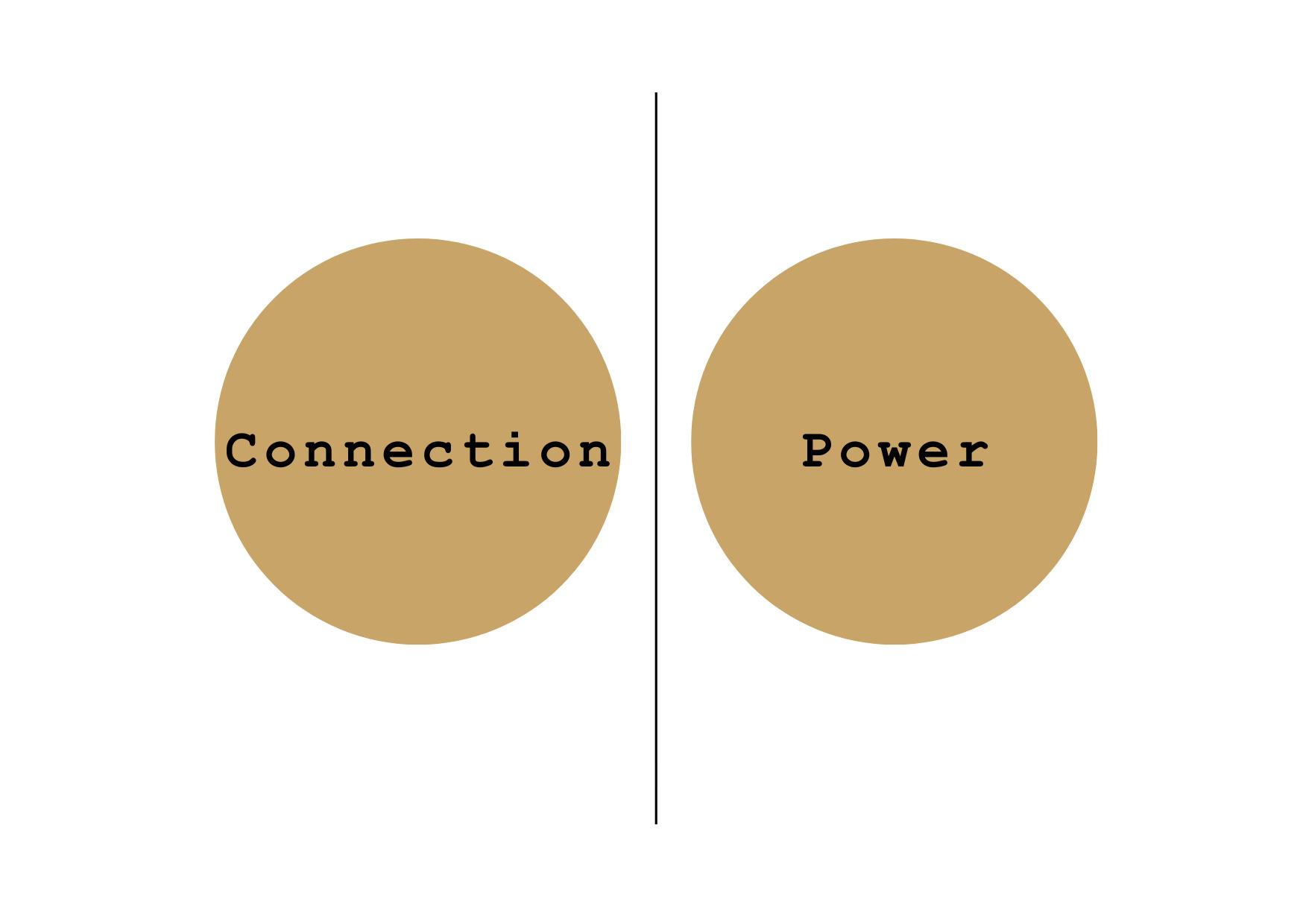
Connection > Power

You can have power, or you can have connection, but you can’t have both.
—Terry Real
Friends,
Watching the news unfold over the course of last week while ensconced in a foreign country was disorienting to say the least.
I’m a bit uncomfortable with the torrent of “hot takes” and the need to provide commentary as it all unfolded–commentary about who has value, who belongs, possible motives, conflict, violence etc.
As it turned out, I posted two short reads last week on communication and civil discourse which were planned ahead of last week’s events. A timely coincidence but not a knee-jerk hot take.
Today, I’m going to process the events of last week, but not to be relevant or score points. And not in order to try to say something unique about what we saw.
Instead, I’m writing reminders to myself about how to navigate the world in which I find myself—a world where many of my neighbors are comfortable with the dehumanization of the other.
Those three reminders that I’ve written to myself below are:
Matt, remember to speak in truth and facts, do not succumb to lazy speech and logical fallacies.
At every opportunity, have the courage to choose connection over power.
Remember, doing this is really simple to understand, it’s just really hard to accomplish.
This week, I’m keeping it to one essay, but I’d really like to hear from you. Please leave your comments below, what reminders do you have for yourself in this volatile time?
Reminder 1: Matt, remember to speak in truth and facts, do not succumb to lazy speech and logical fallacies.
Observation: After last week’s news, people across the political spectrum rushed to respond. Many created calls to action. Others tried to guess the motives of an assassin. Both reactions fell into common thinking traps: the slippery slope fallacy and the fundamental attribution error.
A slippery slope happens when I reject an idea because I assume—without real proof—that it will start a chain of events leading to disaster.
Example: saying, “If we allow this small action, it will surely end in chaos.” That’s not reasoning; it’s fear.
When we make sweeping claims about “the right” or “the left,” we use this flawed way of thinking. It leads us to make choices based on emotion, not facts. Worse, this mindset has historically fed dehumanization—treating people as less than human.
Using violence as justification for more violence or for the justification to subordinate fellow citizens is not only immoral, it’s unskillful.
The second trap known as the fundamental attribution error is a “cognitive attribution bias in which observers underemphasize situational and environmental factors for the behavior of an actor while overemphasizing dispositional or personality factors.”
It’s easy to overlay simplified motivations onto people we dislike or don’t understand.
To fight these traps, I lean on the principle of charity. To me, the litmus test is whether I can fully articulate a position to the approval of someone who genuinely holds that belief.
The mental energy required to fully understand someone else’s position, which differs from my own, necessarily means that I can’t also use that mental energy to attack the person, shame a sincerely held belief, or dominate the debate. Real debate is the skill of defending a position whether you believe it or not.
Reminder 2: At every opportunity, have the courage to choose connection over power.
Observation 1: In the next few months, I am going to be emotionally triggered to accept tidy views about all types of things related to America’s political landscape. And, I’d venture to guess that last week’s events will emerge at the center of much of that rhetoric in the form of slippery slopes and fundamental attribution errors.
It’s just so uninspiring to hear someone “take-down” the other side. I’m still waiting for someone to show up to a meeting of congress—heck I’d even take a podcast or a debate around the thanksgiving table—with questions and nonjudgemental curiosity. Instead, it seems we just keep yelling our positions more loudly across the aisle, while subtly dehumanizing those who don’t see the world like we do.
In short, I can have power (power over my enemies, power over my family, power over nature) OR I can have connection (connection to people I agree and disagree with, connection to my loved ones, connection to nature) BUT I can’t have both. I’ve heard the author and psychotherapist Terry Real express this concept on multiple occasions. (I’ve paraphrased it at the beginning of this essay.)
Observation 2: I’ve observed that so much of public discourse today mirrors the dysfunctional communication pattern posited by psychologist Stephen B. Karpman in 1968 known as the drama triangle.
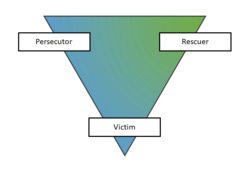
In this pattern, there are persecutors, rescuers, and victims.
In this triangle, each participant must neatly fit in one category: as the one doing the harm, the one victimized by the harm, or the one doing the saving.
Fundamentally, this is a communication structure about power. It’s how people with the “dark triad” of psychopathy, narcissism, and machiavellianism structure their environments. It’s how we end up with a zero-sum world where someone must necessarily lose for the other to win. It’s how we dehumanize each other.
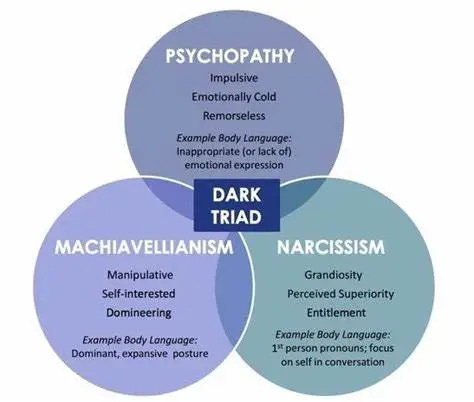
The truth is that no one is coming to save us and we must have the courage to resist these patterns which only serve psychopaths.
Reminder 3: Remember, doing this is really simple to understand, it’s just really hard to accomplish. Do these two things first, they’ve worked in the past and will work again:
Prioritize connection over power. This means using my freedom to respond skillfully, not quickly or with emotion. It means leading with nonjudgemental curiosity. It means recognizing when I’m being primed to fall into one of the patterns above.
Spend my time studying my perceived “enemy.” And not in order to defeat them as Sun Tzu suggested, but to maintain connection and resist those playing games of power.
This is philosophy, this is wisdom, this is how to live a skillful life.
What reminders do you keep yourself?
I've hesitated to make a comment regarding the assassination of Charlie Kirk. There has been so much said from such a wide variety of positions, ranging from profound sadness at the loss to complete satisfaction and gratitude for the killing. It has had my head spinning. So, what I wanted to do is just allow myself to feel my feelings at the moment, and acknowledge the emotions which result and, all the time, realizing that that's what they are; feelings and emotions. We all have the right to do the same.
The false sense of separation is likely, at least in my opinion, the most destructive idea that exists in humanity. Sounds kind of arrogant to say that because it seems to assume that I have "the answer", of which, of course, I do not, at least in total.
I understand that since we are all experiencing this incarnation in separate bodies that can come and go our separate ways that we are born into an environment that says "You Are Separate". I also think that I understand that there is, obviously, a great utilitarian value to this "game". I can only assume that it represents a hope to be able to grow our own separate and collective soul.
I think that a much more humane humanity will absolutely acknowledge the connectedness of all beings, human and non human, as well as all of creation. And, it will be understood that harm to one is harm to all, and love for one is love for all. It will likely take an understanding that this incarnation is lived as a play on Broadway, or a school gymnasium. It's not the reality. Then, will so many of the other solutions proposed by brilliant and not so brilliant people have a chance to play out for the betterment of our societies.
I look forward to having a part in this process!